

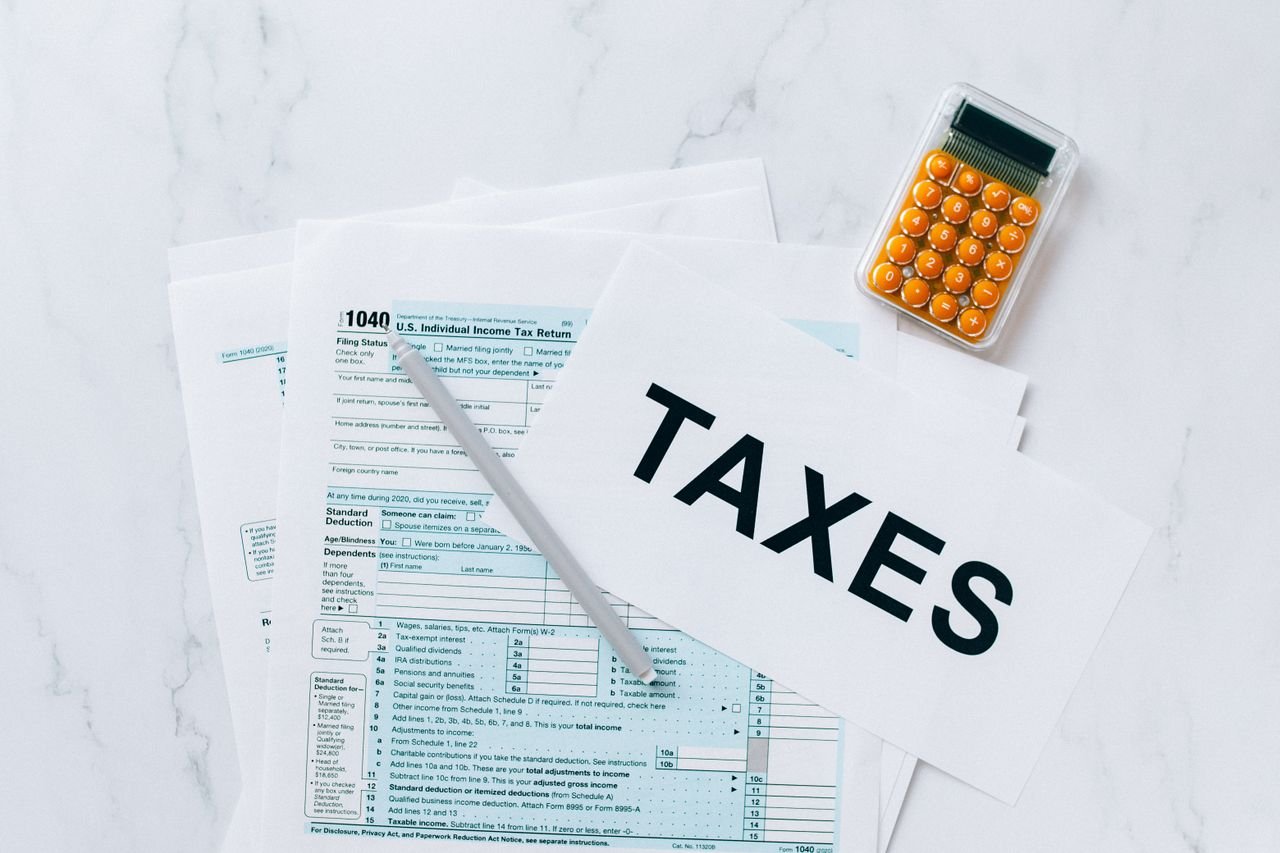
Canada’s 2026 Tax Changes: What Ontario Business Owners and Families Need to Know
Quick answer: For 2026, the lowest federal tax rate is 14% (down from 15%), CPP and EI maximums are higher, the CRA charges 7% interest on overdue tax, and Bill C-15, law since 26 March 2026, repealed the Underused Housing Tax and the Digital Services Tax and doubled the SR&ED refundable-credit limit to $6 million. Capital gains are still taxed at a 50% inclusion rate. Federal Budget 2026 is still to come this fall.
Key takeaways
- Most Canadians pay slightly less federal tax in 2026 because the 15% bottom rate is now 14%.
- Payroll costs rise: the 2026 CPP maximum is $4,230.45 per employee (plus up to $416 of CPP2), and EI insurable earnings rise to $68,900.
- The CRA’s 7% interest rate on overdue balances makes late instalments expensive.
- Business owners gain from SR&ED expansion, the permanent $10 million employee ownership trust exemption, and the end of the Underused Housing Tax.
- Year-end planning should now account for these numbers — and for whatever Budget 2026 adds.
Why 2026 is a “reset” year for Canadian taxes
Tax rules change every year, but 2026 is unusual. Several measures announced in 2024 and 2025 were stuck as proposals until Parliament passed Bill C-15, the Budget 2025 Implementation Act, No. 1, which received royal assent on 26 March 2026. That turned a long list of “proposed” changes into law at once. Some take effect for 2026 returns; others reach back to 2025 or earlier tax years.
At the same time, the federal government has moved to a fall budget cycle. Pre-budget consultations for Budget 2026 closed in September 2026, and the government has signalled a focus on tariff support for businesses, affordability, housing and competitiveness. If you own a business in Ontario, that means two things: act on the rules that are now certain, and leave room in your plan for what the fall budget may change.
Below is a practical walk-through, organized by who it affects.
Changes for individuals and families
The lowest federal tax rate is now 14%
The bottom federal rate dropped from 15% to 14% for 2026 (2025 used a blended 14.5% rate because the change took effect mid-year). Because the same rate is used for most non-refundable credits, the saving is smaller than the headline suggests, but nearly every taxpayer with income above the basic personal amount benefits.
2026 federal tax brackets
| Taxable income | Federal rate |
|---|---|
| Up to $58,523 | 14% |
| $58,523 – $117,045 | 20.5% |
| $117,045 – $181,440 | 26% |
| $181,440 – $258,482 | 29% |
| Over $258,482 | 33% |
The federal basic personal amount for 2026 is up to $16,452 (it phases down to $14,829 for the highest earners).
Ontario’s 2026 brackets
Ontario indexes its brackets each year. For 2026:
| Taxable income | Ontario rate |
|---|---|
| Up to $53,891 | 5.05% |
| $53,891 – $107,785 | 9.15% |
| $107,785 – $150,000 | 11.16% |
| $150,000 – $220,000 | 12.16% |
| Over $220,000 | 13.16% |
The Ontario basic personal amount is $12,989. Remember that Ontario also adds a surtax and the Ontario Health Premium, which the bracket table alone does not show — so your true marginal rate in Ontario can be noticeably higher than the two rates added together.
Capital gains: still 50%
If you delayed selling a cottage, rental or investment portfolio because of the proposed increase in the capital gains inclusion rate, you can relax. The increase to two-thirds on gains above $250,000 was deferred in January 2025 and then cancelled outright on 21 March 2025. In 2026, half of a capital gain is taxable, as it has been for decades.
First-time home buyers and new homes
Bill C-15 legislated GST relief for first-time buyers of newly built homes. If you are buying a new home as your first home, ask your lawyer and accountant how the rebate applies to your purchase price and agreement date — the rules have thresholds, and the provincial part of HST in Ontario follows separate rules.
The Underused Housing Tax is gone
The federal Underused Housing Tax (UHT) — which created confusing filing obligations for many Canadian owners holding property through corporations, partnerships and trusts — has been repealed starting with the 2025 calendar year. If you were caught by UHT filings for 2022 to 2024, keep your records: anything that was due for those years is still relevant. Note that municipal taxes such as Toronto’s Vacant Home Tax are separate and still apply.
Changes for employers and payroll
Payroll is where 2026 changes cost businesses real money. CPP and EI limits rose again.
| Item (2026) | Employee | Employer |
|---|---|---|
| CPP rate | 5.95% | 5.95% |
| CPP maximum pensionable earnings (YMPE) | $74,600 | — |
| CPP basic exemption | $3,500 | — |
| Maximum CPP contribution | $4,230.45 | $4,230.45 |
| CPP2 rate (earnings $74,600 – $85,000) | 4% | 4% |
| Maximum CPP2 contribution | $416.00 | $416.00 |
| EI rate | 1.63% | 2.282% (1.4×) |
| Maximum insurable earnings | $68,900 | — |
| Maximum EI premium | $1,123.07 | $1,572.30 |
A self-employed owner pays both halves of CPP: up to 8, 460.90 * * plusupto * *832 of CPP2.
Other payroll changes to note:
- Ontario minimum wage rose to $17.95 an hour on 1 October 2026 (from $17.60). If you employ hourly staff, check that your payroll system updated the rate for every affected employee, including overtime calculations.
- Owner-managers deciding between salary and dividends should rerun the numbers with the new CPP2 ceiling and the 14% bottom rate. Our guide to salary vs dividends walks through the trade-offs.
Changes for business owners and corporations
SR&ED: the refundable limit doubles to $6 million
The Scientific Research and Experimental Development (SR&ED) program had its biggest expansion in decades:
- The expenditure limit for the 35% enhanced refundable credit rises from 3millionto * *6 million**, worth up to $2.1 million a year in refundable credits.
- Capital expenditures are eligible again.
- Eligible Canadian public corporations can now access the enhanced refundable credit.
- The changes apply to tax years starting on or after 16 December 2024.
Because SR&ED claims can be filed up to 18 months after year-end, many companies can still benefit for their 2025 year. Read our full guide: SR&ED in 2026.
The Digital Services Tax is repealed
The 3% Digital Services Tax, which mainly affected large multinational tech platforms, was repealed. Most small businesses never paid it directly, but some platforms had been passing costs through to Canadian advertisers and sellers. Watch your platform fee statements for changes.
Lifetime capital gains exemption
The lifetime capital gains exemption (LCGE) for qualified small business corporation shares and qualified farm or fishing property rose to $1.25 million in June 2024 and is indexed to inflation from 2026. If you plan to sell your company in the next few years, the share structure you set up now determines whether you can use it. See Selling your business in Canada.
Employee ownership trusts: the $10 million exemption is permanent
The $10 million capital gains exemption on qualifying sales to an employee ownership trust (EOT) was originally available only for sales between 2024 and 2026. The federal Spring Economic Update on 28 April 2026 announced that the exemption will be permanent. For owners without a family successor, an EOT is now a serious exit option rather than a race against a deadline.
Interest on overdue tax stays at 7%
The CRA sets prescribed interest rates every quarter. For October to December 2026:
| Prescribed rate (Q4 2026) | Rate |
|---|---|
| Interest on overdue tax, CPP and EI | 7% |
| Interest the CRA pays individuals on overpayments | 5% |
| Interest the CRA pays corporations on overpayments | 3% |
| Prescribed rate for family loans and taxable benefits | 3% |
The rate is compounded daily, and it has now held steady for six straight quarters. At 7%, a $20,000 corporate tax balance left unpaid for a year costs more than $1,400 in non-deductible interest. That is why instalments matter — see our guide to CRA tax instalments.
The 3% prescribed rate is good news for families using a prescribed-rate loan to split investment income with a lower-income spouse. A loan set up at 3% keeps that rate for its whole life, even if the CRA rate later rises.
Changes in how you deal with the CRA
Backup multi-factor authentication is now required
Since February 2026, the CRA requires users of My Account and My Business Account to have a backup multi-factor authentication method on file, in addition to their primary method. If your only MFA method is a phone number you lose access to, you can be locked out at the worst possible time — such as the week before a filing deadline. Add a backup (a passcode grid or an authenticator app) now. Our guide to CRA scams and account security covers the full checklist.
Digital platforms now report your income
Platforms such as Airbnb, Uber, Etsy and similar marketplaces now report sellers’ income to the CRA every January. If you earn side income through an app, assume the CRA knows. See CRA now sees your platform income.
Tariffs: the business backdrop for 2026
Tax rules don’t operate in isolation. On 22 August 2026, the United States imposed a 50% tariff on $27.6 billion of Canadian goods, and Canada responded with matching counter-tariffs from 8 September 2026 alongside a $7.5 billion support package for workers and businesses. If you import or export, your cost of goods, pricing and cash flow need a fresh look. We cover this in Tariffs and your bottom line.
What to do before 31 December 2026
A short, practical list for Ontario business owners and families:
- Rerun your owner pay mix. With the 14% bottom rate and new CPP2 limits, check whether your salary/dividend split is still optimal for 2026 and 2027.
- Catch up instalments. If you are behind on 2026 instalments, a catch-up payment before 15 December reduces interest charges.
- Review SR&ED eligibility. If your company built software, improved a process or solved a technical problem in 2025 or 2026, check whether it qualifies before the 18-month window closes.
- Update payroll. Confirm the 1 October minimum wage increase and prepare your system for 2027 CPP and EI rates when they are published.
- Lock in a prescribed-rate loan at 3% if income splitting with a spouse makes sense for your family.
- Secure your CRA accounts with a backup MFA method and review who is authorized to represent your business.
- Watch Budget 2026. Leave room in your plan for any new measures, especially those targeting tariff-affected businesses.
Frequently asked questions
The lowest federal rate is 14% on taxable income up to $58,523. It was 15% before the change and a blended 14.5% for 2025.
No. The proposed increase to two-thirds on gains over $250,000 was cancelled on 21 March 2025. The inclusion rate remains 50%.
An employee pays up to $4,230.45 of regular CPP plus up to $416 of second additional CPP (CPP2). The employer matches both amounts. Self-employed individuals pay both halves.
Not for 2025 and later years — Bill C-15 repealed the UHT from the 2025 calendar year. Obligations for earlier years are a separate matter; talk to us if you missed a 2022–2024 filing.
7% a year, compounded daily, for October to December 2026. The rate is reviewed quarterly.
The government concluded pre-budget consultations in September 2026 and is expected to table Budget 2026 in the fall. We will update this article once it is released.
Talk to Solstice Partners about your 2026 plan
Every change above interacts with the others: your owner pay, your instalments, your payroll and your exit plan. Solstice Partners helps Toronto and GTA business owners turn these rules into a clear year-end plan. Book a consultation and we’ll review your 2026 position before the deadlines arrive.
Sources
- Canada Revenue Agency — Payroll deductions tables (T4032-ON), January 2026
- Canada Revenue Agency — Prescribed interest rates
- Department of Finance Canada — Pre-budget consultations for Budget 2026 (September 2026)
- Department of Finance Canada — Response to U.S. tariffs (August 2026)
- Government of Ontario — Minimum wage
- Canada Revenue Agency — Underused Housing Tax
This article is general information, not tax advice for your situation. Rates and rules are current as of October 2026 and can change; confirm the details before acting.


Leave a comment